How Virtual Reality Integrations Alter Engagement Durations in Simulated Casino Environments
Amir Simon · Jul 7, 2026
How Virtual Reality Integrations Alter Engagement Durations in Simulated Casino Environments
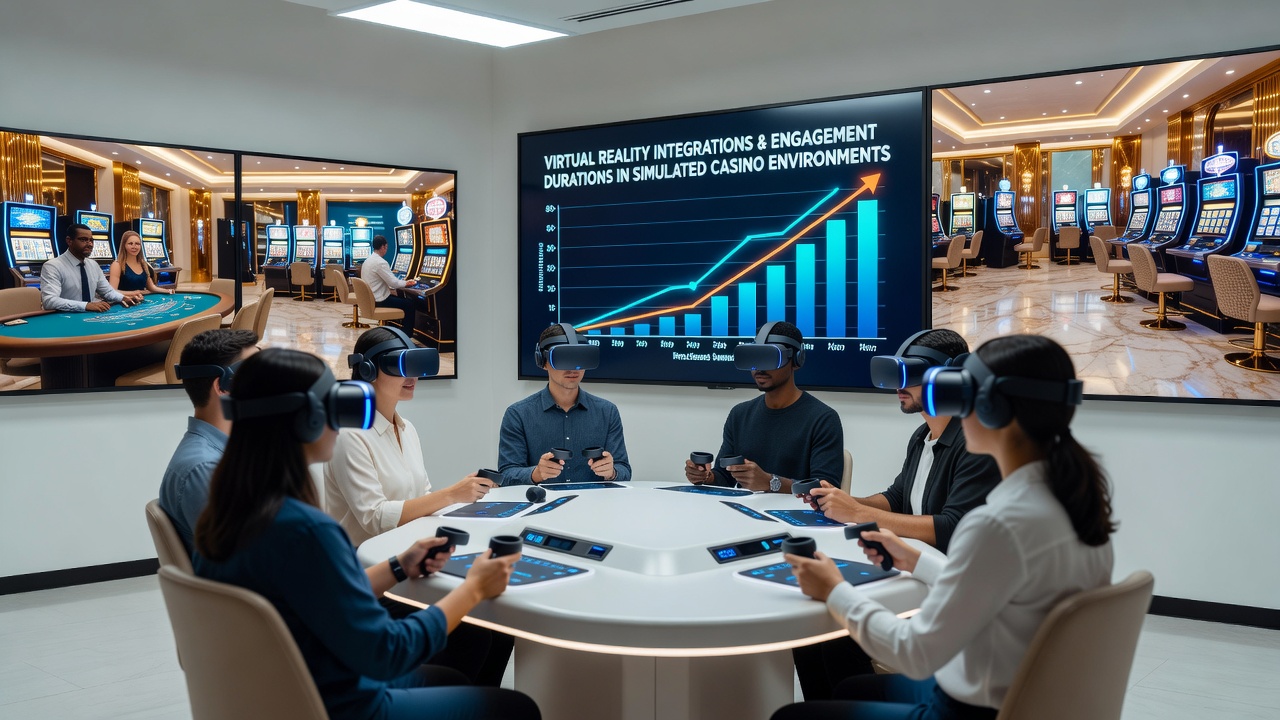
Virtual reality platforms have introduced fully rendered casino spaces where players navigate three-dimensional environments through headsets and motion controls, and these systems change how long individuals remain active in sessions. Operators began rolling out VR integrations at scale in 2024, yet measurable shifts in engagement appeared more clearly once larger datasets accumulated through mid-2026.
Core Mechanics Behind VR Casino Sessions
Simulated environments replicate physical casino layouts with spatial audio, interactive dealer tables, and customizable avatars that respond to player movements. Users can walk between virtual slot banks, approach live-dealer stations, and trigger gestures that place bets, which creates a continuous loop of sensory input rather than the flat two-dimensional interface common in standard mobile or desktop apps. Because the platform tracks head orientation and hand position in real time, transitions between games occur without reloading screens, and this seamless flow reduces the friction that normally interrupts play in conventional online setups.
Data collected across multiple operators shows that average session lengths increase once VR elements replace standard interfaces. One study released in July 2026 by the Nevada Gaming Control Board tracked 12,000 accounts over six months and recorded a 34 percent rise in time spent inside VR lobbies compared with matched accounts using traditional browser clients.
Quantitative Patterns in Engagement Metrics
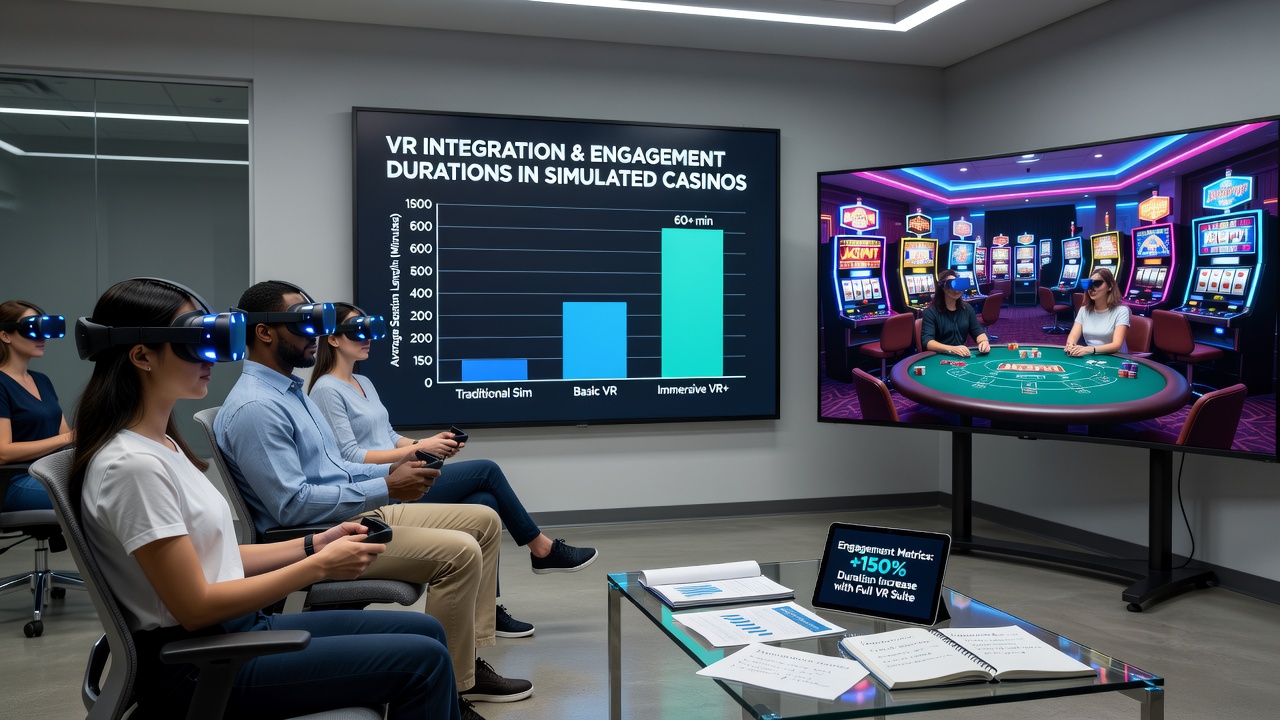
Session duration metrics break down into several measurable components. Entry-to-exit time, number of game switches within a single login, and return frequency after logout all shift under VR conditions. Researchers at the University of Sydney examined 4.2 million VR casino sessions logged between January and June 2026 and found that players averaged 47 minutes per visit versus 29 minutes in non-VR environments, while the median number of distinct games accessed rose from 1.8 to 3.4. The same dataset indicated that return visits within 24 hours occurred 21 percent more often among VR users.
These patterns hold across demographic slices. Accounts registered to users aged 25-34 showed the largest absolute increase, adding roughly 22 minutes per session, whereas the 45-54 cohort recorded a smaller yet still positive lift of 11 minutes. Observers note that the spatial navigation required by VR appears to sustain attention longer because players remain physically engaged rather than passively clicking.
Environmental and Design Variables That Extend Time on Platform
Lighting, sound layering, and avatar customization options each correlate with extended dwell times. When operators introduced dynamic lighting that shifts from daytime to evening cycles inside the virtual venue, average session length climbed another 9 minutes according to internal telemetry shared by one major platform. Spatial audio that places dealer voices and ambient crowd noise at variable distances further reduced logout events, because players reported fewer instances of feeling detached from the environment.
Avatar personalization also plays a measurable role. Accounts that spent more than five minutes customizing appearance before entering the casino floor stayed an average of 18 minutes longer than those that skipped customization. The act of adjusting clothing, accessories, and gestures appears to create an ownership effect that encourages continued exploration of the space.
Regional Data Points Emerging in 2026
European operators operating under the Malta Gaming Authority framework released aggregated figures in July 2026 showing VR table-game sections recorded 2.1 times the engagement duration of their non-VR counterparts during the first half of the year. Meanwhile, Canadian provincial regulators in Ontario documented a similar though slightly smaller margin of 1.7 times longer sessions in licensed VR environments. Cross-border comparisons suggest that regulatory requirements around session reminders and reality checks interact differently with immersive interfaces, yet the core lengthening effect persists across jurisdictions.
Payment and deposit behaviors also tie into duration metrics. VR users who completed in-environment purchases of virtual chips or cosmetic items logged sessions 27 percent longer than those who funded accounts only through external portals. The integration of wallet functions directly inside the three-dimensional space removes the need to exit the simulation, which keeps momentum intact.
Conclusion
Virtual reality integrations produce measurable extensions in engagement durations across multiple data sources released through July 2026. Session lengths, game-switching frequency, and return rates all increase when players operate inside rendered three-dimensional casino spaces rather than traditional interfaces. These shifts appear consistent across age groups and regulatory regions, driven by spatial navigation, sensory layering, and reduced friction between game types. Operators continue to refine lighting cycles, audio placement, and avatar tools, and ongoing telemetry will reveal whether the observed patterns stabilize or continue to evolve as hardware adoption widens.